Our Mission

To inspire the next generation of passionate, altruistic, and well-informed innovators to advance society through accessible, genetically engineered solutions.
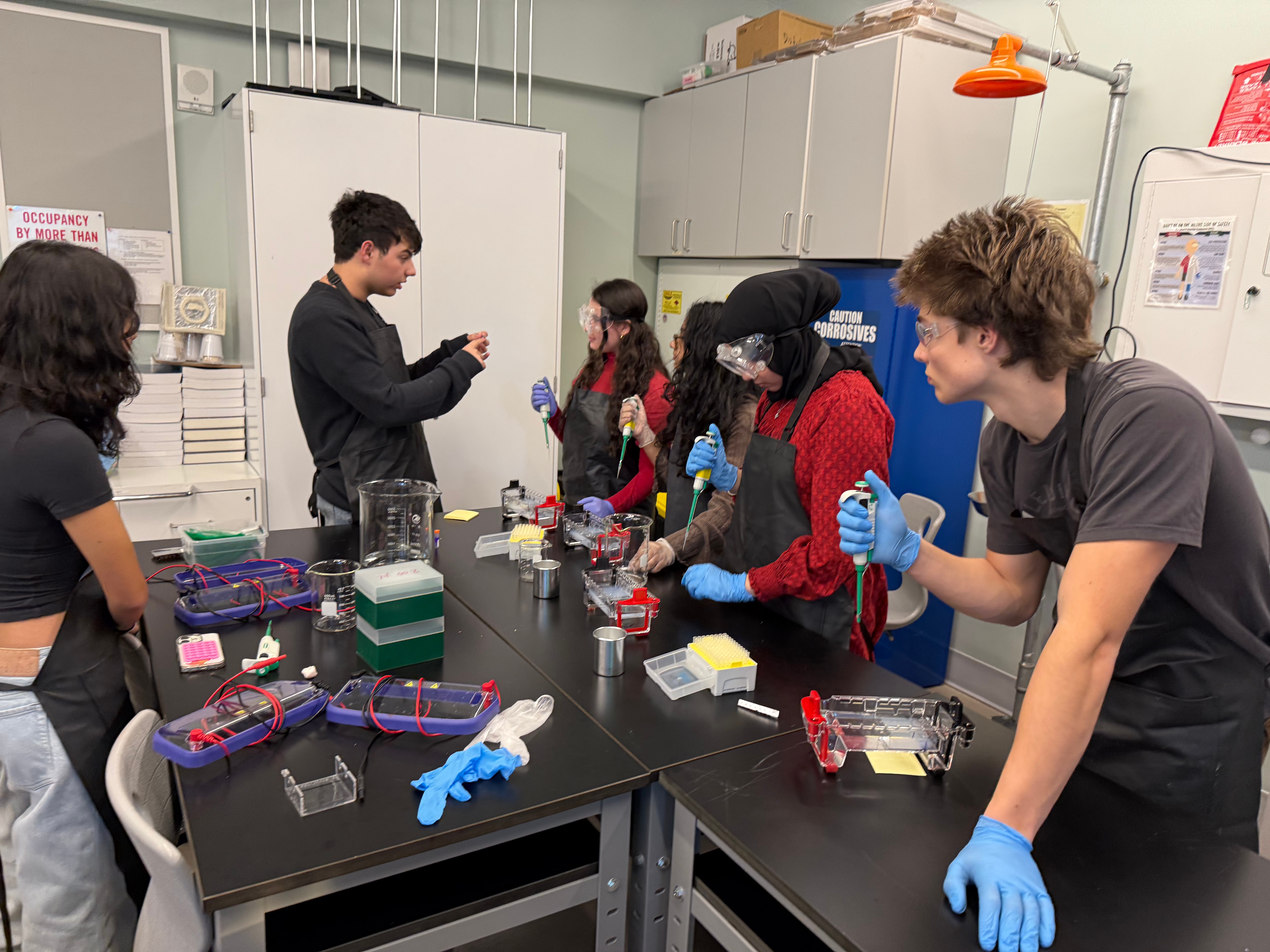
Student-Driven Vigor

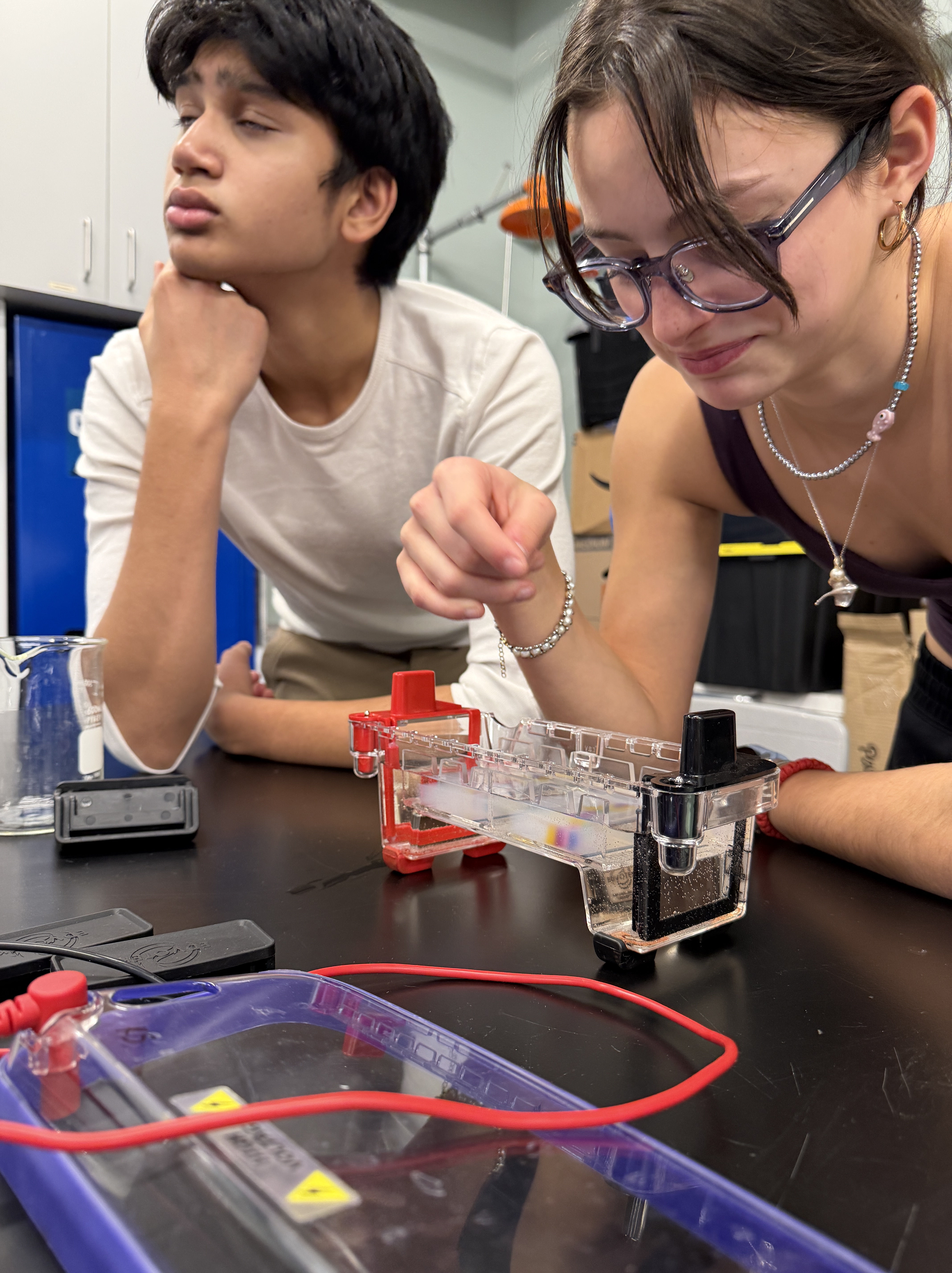
Not only does DTWS believe in teaching others for the purpose of expanding the impact and awareness of innovative biotechnological concepts, but we also strongly stand and support student-led teaching. As such, the primary mode of action DTWS utilizes to uphold our mission is the establishment of regional, education-based, hands-on chapters that are taught by and for students of various ages.

The Importance of DTWS

When DTWS’s founder, Owen Geyman, was in eighth grade, he stumbled onto the concept of genetic engineering from the single observation that lactose intolerance was hereditary in his family; that one Google result changed the perpetual trajectory of his life, marking the moment Owen realized the capabilities of the technology of genome engineering. About a year later, Owen completed his own, brief yet independent genetic engineering experiment, which is where he truly realized this was his passion. Immediately, however, Owen realized that these kits were not easy to follow and while they did have instructions, he did not understand the background knowledge and concepts needed to possess in order to successfully and effectively complete the experiment. That is where DTWS originates from.

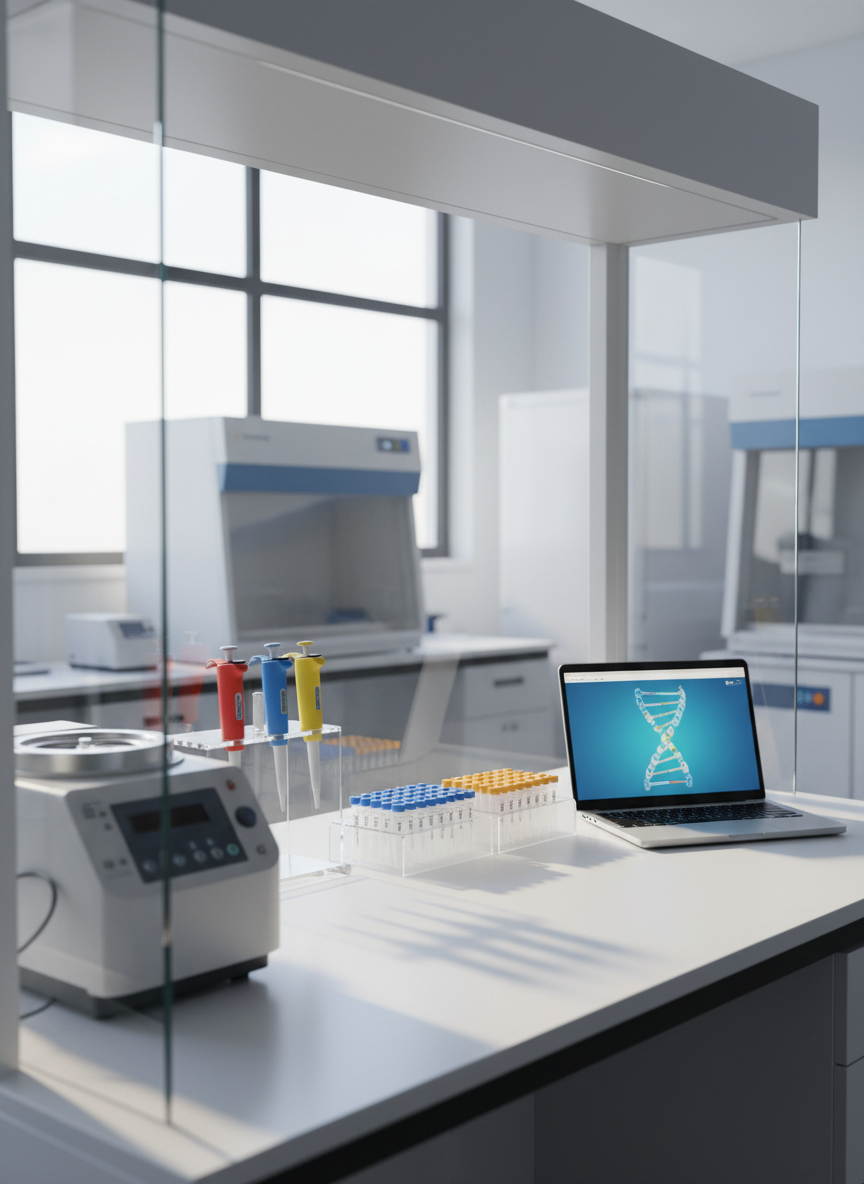
A high-resolution photographic realism scene featuring a sleek, glass-walled molecular biology lab bench covered with well-organized equipment: a polished stainless-steel microcentrifuge, a transparent acrylic pipette stand holding colorful pipettes, neatly labeled microtubes in frosted racks, and an open laptop displaying a bright DNA double helix diagram on a clean interface. The bench sits beneath a wide laboratory window, where soft diffused daylight casts gentle reflections on the glassware and subtle shadows across the matte white work surface. The background is slightly blurred incubators and refrigerators, creating depth without clutter. Shot at eye level with moderate depth of field, the composition feels clean, modern, and professional, evoking curiosity, precision, and an accessible introduction to advanced molecular biology.
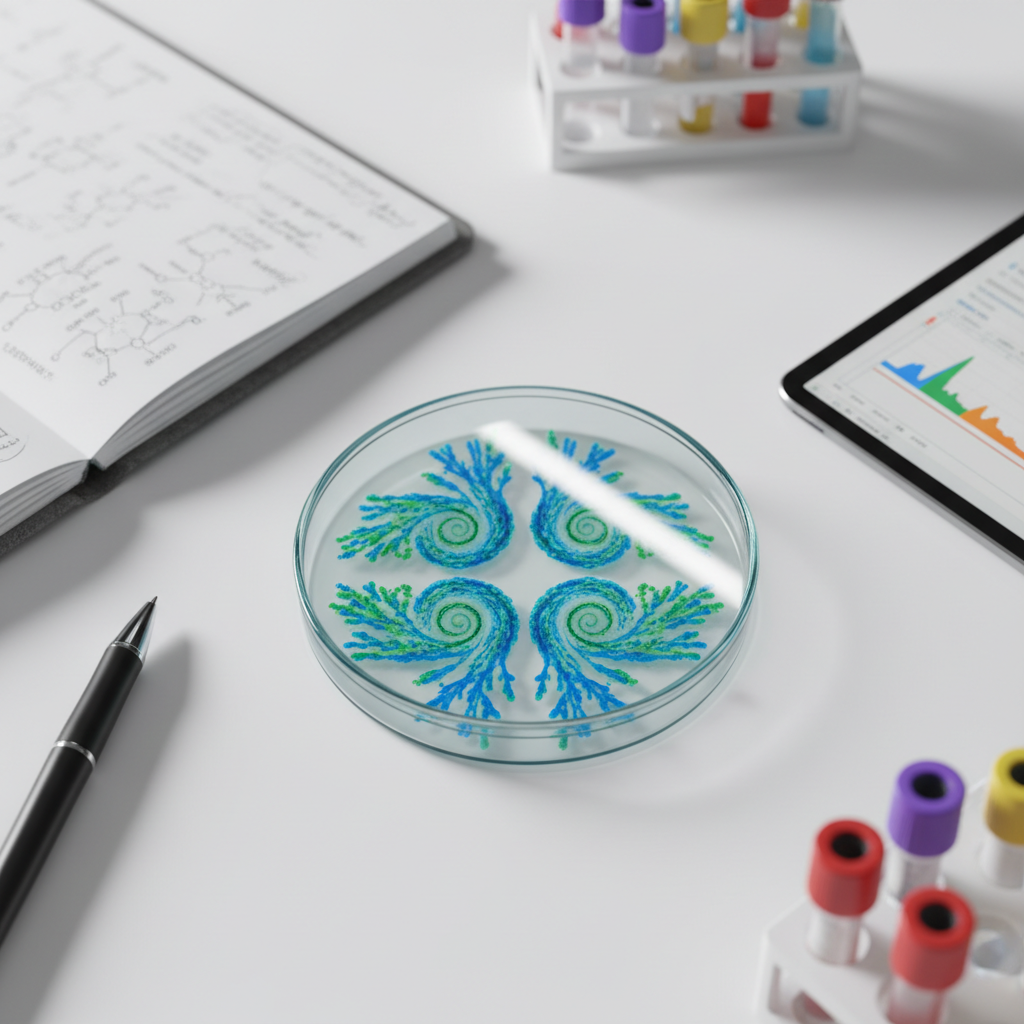
A meticulously arranged photographic realism close-up of a transparent petri dish filled with vivid blue and green bacterial colonies forming intricate patterns, resting on a smooth white laboratory countertop. Around it, slightly out of focus, lie color-coded microtubes, a crisp lab notebook with molecular pathway sketches, and a tablet showing a simplified genome browser interface with colored peaks. Overhead LED panel lighting produces bright, even illumination, creating crisp reflections on the petri dish lid and subtle shadows along the pen and notebook. Captured from a slightly elevated angle with shallow depth of field, the petri dish is centered using the rule of thirds, creating a focused, calm, and intellectually engaging atmosphere that highlights the beauty and structure of microbiological growth for educational purposes.
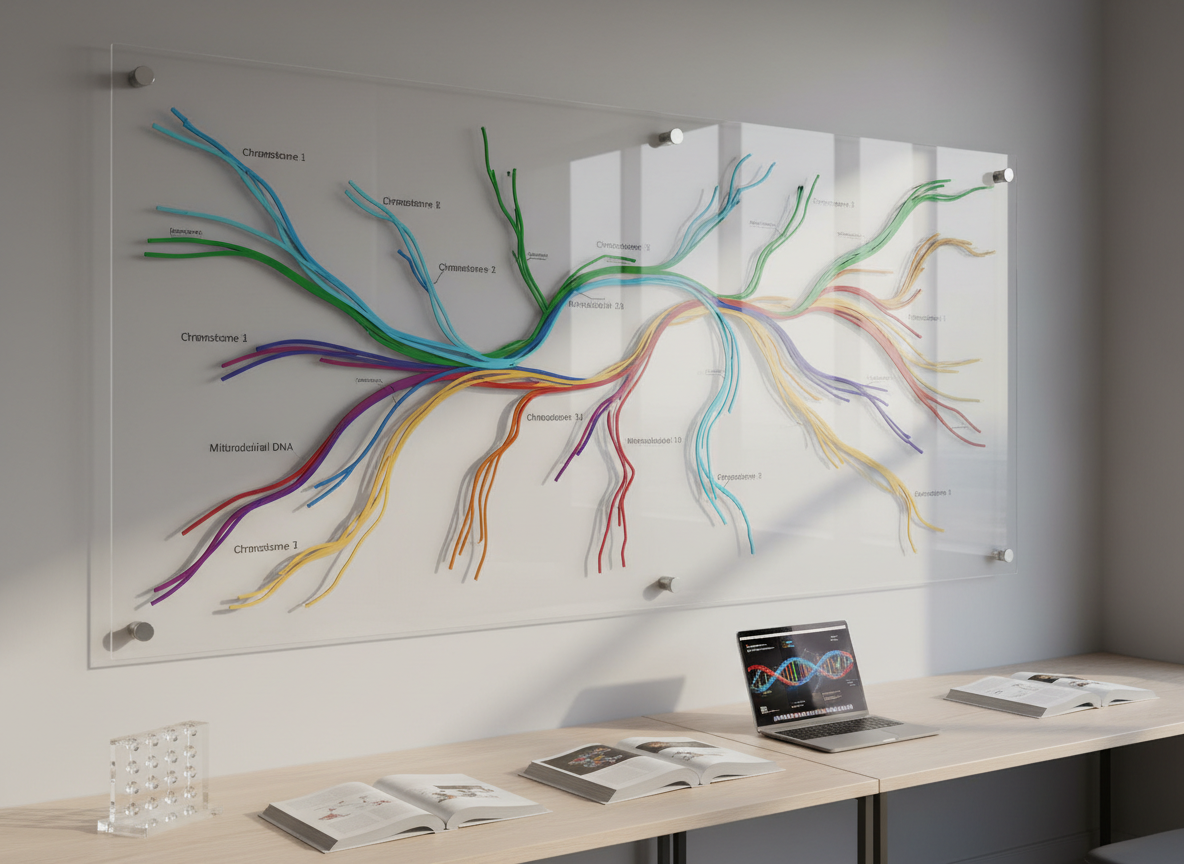
A polished, photographic realism depiction of a large transparent wall chart showing an elegantly simplified human genome map, with brightly colored chromosome bands and clean, legible labels, mounted on a matte light-gray wall in a modern learning space. Below the chart, a long, pale wood table holds open textbooks, a sleek silver laptop showing an animation of DNA replication, and a set of neatly stacked acrylic models of nucleotides. Soft afternoon light streams through an unseen window, casting gentle diagonal shadows across the wall and table, giving subtle warmth to the neutral tones. Shot from a slightly wide, eye-level perspective to capture the full chart and workspace, the composition feels organized, aspirational, and professional, perfect for conveying advanced genomics in a welcoming, student-centered environment without any human presence.